 >
>Polish Your Writing: Top Tools to Check Your Essay for Mistakes
In the digital age, the difference between a mediocre piece of writing and a masterpiece often lies in the final polish. Students, professionals, and academics alike face the constant challenge of maintaining clarity while navigating the complexities of syntax and tone. As expectations for high-quality content continue to rise, relying solely on a single draft is no longer a viable strategy for success. The evolution of assistive technology has transformed the editorial process from a tedious manual chore into a streamlined, analytical journey. Mastering the art of refinement requires not just a keen eye but also a suite of sophisticated instruments designed to catch the nuances a human writer might overlook during a late-night session.
Why Modern Writers Should Embrace Digital Assistance
Implementing specialized editing tools is a strategic investment in your professional reputation and intellectual growth. These platforms do not merely correct typos; they provide a diagnostic overview of your linguistic habits, highlighting patterns of wordiness or structural ambiguity that might otherwise go unnoticed. By utilizing technology to handle the mechanical heavy lifting, you free up cognitive resources to focus on the nuance of your argument and the strength of your evidence. This collaborative approach, combining human creativity with algorithmic precision, ensures that your message is conveyed with maximum clarity, transforming a standard submission into a compelling narrative that commands respect from any audience.
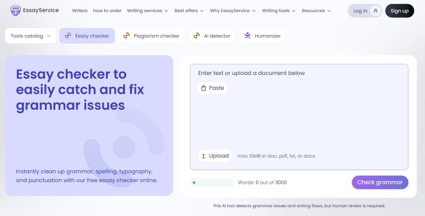
Navigating the rigorous demands of modern academia requires a blend of time management and linguistic precision. For many students, the pressure to deliver flawless work becomes overwhelming, leading them to seek professional guidance that balances speed with scholarly integrity. When you decide to check your essay for mistakes , utilizing a platform likeEssayService provides more than just a quick fix; it offers a comprehensive structural audit. This service stands out by employing seasoned experts who understand the subtle requirements of different citation styles and argumentative frameworks. Their approach ensures that the logical flow of the document remains intact while eliminating grammatical inconsistencies that could undermine the author's credibility.
Beyond simple proofreading, this platform serves as a mentorship tool where an experienced essay writer can help bridge the gap between a rough concept and a polished final product. The value lies in the human touch - the ability to interpret context and intent in ways that automated algorithms sometimes struggle to achieve. By prioritizing original thought and meticulous attention to detail, they empower users to submit work with confidence. This positive feedback loop between student and expert fosters a deeper understanding of academic standards, making it a premier choice for those aiming for the highest tier of achievement.
Grammarly
Consistency serves as the backbone of professional communication, yet it is often the first thing to suffer when faced with tight deadlines. Grammarly has redefined the landscape of automated editing by providing an interface that acts as a vigilant co-pilot. Its strength lies in its ability to detect not only mechanical errors but also tonal shifts that might confuse the intended audience. By analyzing sentence length and word choice it suggests adjustments that enhance readability without stripping away the author's unique voice. This tool has become an essential component of the modern workflow, ensuring that every sentence contributes meaningfully to the overall narrative.
The sophistication of this software extends to its genre-specific settings, which allow users to tailor suggestions based on whether the document is a creative story, a technical report, or a formal letter. Highlighting passive voice or repetitive vocabulary encourages a more dynamic approach to writing, pushing the creator to explore more evocative synonyms and tighter structures. This proactive feedback loop transforms the act of editing into a learning experience, gradually sharpening the user’s innate sense of rhythm and impact. It is this marriage of artificial intelligence and linguistic theory that keeps the tool at the forefront of the industry.
Hemingway Editor
In a world saturated with information, brevity is a virtue that cannot be overstated. The Hemingway Editor focuses on the philosophy that great prose should be direct and accessible, much like the legendary author for whom it is named. Rather than focusing solely on grammar, this tool targets the "denseness" of the text, flagging sentences that are too long or complicated for a general reader to follow. It serves as a brutal yet necessary mirror, reflecting the clutter that often hides a powerful message. By identifying "purple prose" and unnecessary adverbs, it forces a reorganization of thoughts into a leaner, more impactful format.
The visual feedback system, which uses different colors to denote various levels of difficulty, makes the revision process feel almost like a puzzle. Red highlights indicate nearly unreadable passages, while yellow suggests simpler phrasing. This methodology is particularly useful for those who tend toward academic verbosity or circular reasoning. Stripping away the fluff ensures that the core argument remains the focal point, allowing the logic to shine through without the distraction of linguistic hurdles. It is an indispensable asset for anyone looking to master the art of persuasive and transparent communication.
ChatGPT
The emergence of large language models has introduced a new dimension to the editorial process, offering a conversational approach to refinement. Unlike traditional spellcheckers, ChatGPT can serve as a sophisticated peer reviewer, capable of summarizing arguments, identifying logical fallacies, and suggesting alternative perspectives. It excels at brainstorming transitions and helping writers overcome the dreaded "blank page" syndrome by providing structural outlines or expanding on brief bullet points. This versatility allows for a more holistic view of the document, treating it as a living conversation rather than a static piece of text.
When utilized correctly, this AI can mimic different personas or target specific demographic reading levels, ensuring the content is perfectly tailored for its intended audience. It provides a unique opportunity to test how a specific thesis might be perceived by a skeptical reader or a novice in the field. This level of interaction goes beyond simple correction; it involves a deep dive into the conceptual foundations of the work. For those looking to elevate their prose to a professional standard, incorporating such advanced computational logic provides a competitive edge in an increasingly digital world.
Conclusion
The transition from a rough draft to a polished masterpiece is a journey that no writer should take alone. By integrating the human expertise of services like EssayService with the analytical power of modern digital tools, you create a robust framework for academic and professional success. Ultimately, the commitment to refining your work is a commitment to excellence, ensuring that your ideas are not just read but truly understood and valued.