 >
>Panay Incident
-
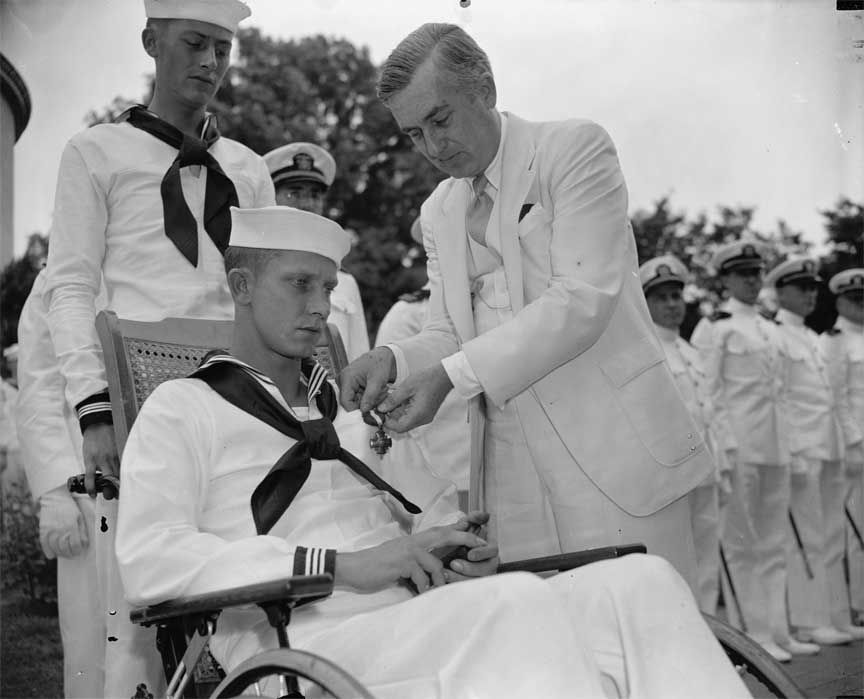
Receiving Medal
On December 12, 1937 Japanese planes bombed a US river gunboat, the Panay, in China. The Panay sank, 2 were killed and 30 wounded. The State Department demanded an apology, which the Japanese provided. The attacked followed Japanese attacks against Chinese civilians.
The USS Panay was a United States Navy river gunboat that was stationed in China to protect American interests and personnel in the region.
At the time, tensions between Japan and China were high, and there had been previous incidents involving clashes between Japanese and Chinese forces. On that day, the USS Panay was anchored in the Yangtze River near Nanking (now Nanjing), China. The ship was marked with large American flags and was clearly identified as a U.S. vessel.
Without warning, Japanese aircraft launched an unprovoked attack on the USS Panay. The ship came under heavy fire from Japanese bombers and fighter planes. The attack resulted in the sinking of the USS Panay and the loss of three American lives, including one civilian. Additionally, several crew members and passengers were injured.
The attack on the USS Panay caused outrage in the United States and other parts of the world. It was widely seen as a violation of international law and a direct attack on a neutral nation's vessel. The incident strained relations between the United States and Japan, further fueling anti-Japanese sentiments.
Japan, after realizing its mistake, quickly apologized and expressed regret for the attack. The Japanese government agreed to pay an indemnity to the United States as compensation for the incident. The diplomatic fallout was somewhat mitigated, as the incident occurred during a period of ongoing negotiations between the two countries.
- Panay hero receives Navy Cross. Washington, D.C., July 1. Fireman first class John L. Hodge, who is recuperating at Naval Hospital here, was today decorated with the Navy Cross for the bravery he displayed during the sinking of the U.S. gunboat Panay by Japanese bombs last year. Assistant Secretary of the Navy Charles Edison is pictured pinning the award on the Bluejacket. It was hodge who carried Jim Marshall, staff writer for Collier's injured in the bombing, from the scene of the sinking vessel to Wuhu, China, a distance of about 17 miles, 7/1/38