However, sending troops alone was not enough. It was decided that a new commander was also needed. Thus, the Division of the Mississippi was created, spanning the Mississippi to the Alleghenies. U.S. Grant was appointed the commander of the new unit. Grant was given the option of maintaining Rosnecrans as the Commander of the Army of the Cumberland, or replacing him. Grant decided to replace Cumberland with Sherman. Once he arrived in Chattanooga Grant's first goal was to open the supply route into Chattanooga. Grant did this with a well planned action– in which, elements of Hooker’s advancing corps, combined with troops from Chattanooga to seize the crossings of the Tennessee River near the Raccoon Mountains. This became known as the Cracker line. Once this action was accomplished, supply lines were restored and Grant's forces could resume receiving regular rations.
Grant's future success was further aided, by dissension in the Confederate ranks. Bragg's subordinates all called for his removal. Confederate President Davis was forced to travel to Bragg's headquarters to try to work out the differences. This was a task he failed to achieve. The only thing Davis did accomplish, was to recommend the detachment of Longstreet to reconquer Little Rock.ilitia headquarters in Booneville. The militia was routed and the Unionist were in firm control of the state.
With the departure of Longstreet, the momentum moved inextricably to Grant. By mid-November, Sherman had arrived from Vicksburg with an additional 17,000 men. Grant ordered Burnside, who was outside Little Rock, to keep Longstreet busy as long as possible. This he did, by avoiding battle, and instead forcing Longstreet to begin a siege of the city.
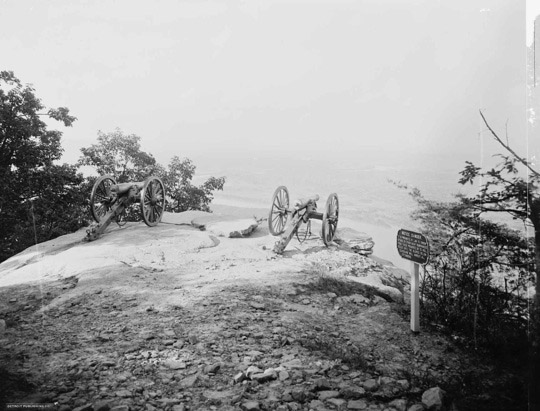
Grant was now ready to assault the Confederate forces surrounding him at Chattanooga. His plan called for an attack on both flanks of the Confederate lines, while using Thomas' recently defeated forces as a mere feint in the center. Thus, on November 24th, Hooker's forces assaulted Lookout Mountain. With relatively light casualties (less than 500 soldiers killed), Hooker’s forces successfully ascended Lookout Mountain.
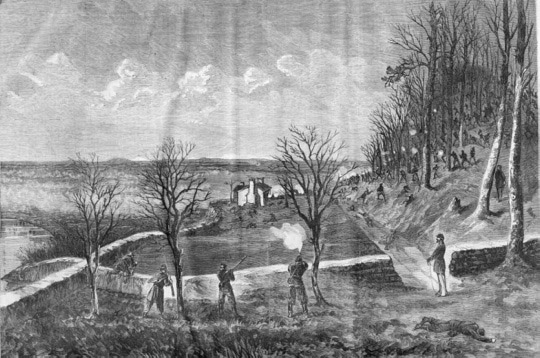
Sherman forces, on the other hand, were having a harder time of it. On the 24th, they successfully ascended the other end of the Confederate lines, only to find that it was not part of Missionary Ridge, but a separate hill. The next morning, on the 25th, Sherman’s forces attempted to assault the end of Mission Ridge, with little success. Finally, an exasperated Grant ordered Thomas forces to make a limited assault in the center, to relieve some of the pressure on Sherman. The assault by the veterans of Chickamauga succeeded beyond all expectations. Thomas’ forces sprinted up the open plain, straight at the first line of Confederate forces and overcame them swiftly. Grant, and the other commanders watching from below at Orchard Knob, were shocked to see the Union soldiers advance from the first line of Confederate fortification and head straight up the hill without orders. The defenders were similarly shocked, and fell back in total disarray. In a few minutes, all of the Confederate positions were overrun, and Missionary Ridge was in Union hands. The Confederate forces retreated almost 30 miles towards Atlanta.