 >
>The History of Presidents on Coins: Who's on Every U.S. Coin
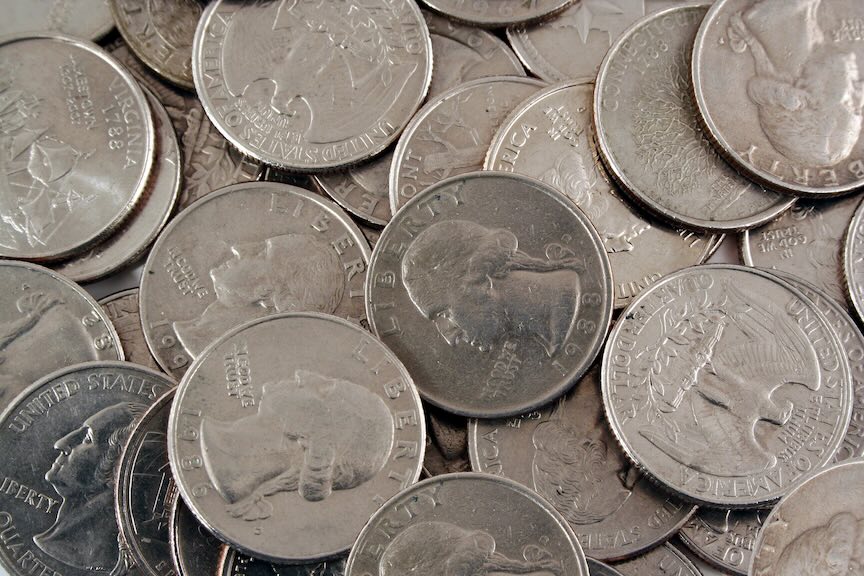
For most of American history, putting a president's face on a coin was considered deeply un-American. The founders had just broken free from a monarchy where kings stamped their portraits on currency as a symbol of power and dominance — the last thing the new republic wanted was to replicate that tradition. For over a century, U.S. coins featured allegorical figures: Lady Liberty, the Indian Head, the Buffalo. Presidents were nowhere to be found.
That changed in 1909, and once it did, there was no going back. Today, presidents on coins are so familiar that most Americans never stop to think about who chose them, why, or what the story behind each face actually is. Here's the complete history — coin by coin.
Want to know what your presidential coins are worth?
Try CoinHix the best free coin identifier app for U.S. coins. Snap a photo of any coin and CoinHix instantly identifies it, grades it on the Sheldon Scale, and pulls real market pricing from live auction data. It's one of only two apps in the world with automatic error coin detection, flagging rare doubled dies and missing mint marks on every scan. Free to download, no paywall on core features.
Who's on the Penny
Abraham Lincoln has appeared on the one-cent coin since 1909, making him the first president ever depicted on a circulating U.S. coin. The occasion was the 100th anniversary of Lincoln's birth, and public enthusiasm for the centennial celebration was strong enough to finally override the long-standing cultural resistance to presidential portraits on coinage.
The portrait was sculpted by Victor David Brenner, based on a plaque he had created of Lincoln that caught the eye of President Theodore Roosevelt. Roosevelt, who was actively pushing to improve the artistic quality of American coins, championed the design. When the Lincoln cent was released in August 1909, it was an immediate sensation — crowds lined up at banks and post offices to get one.
The reverse of the coin has changed over the decades. The original "wheat penny" design ran until 1958, when it was replaced by an image of the Lincoln Memorial. In 2009, the centennial of the Lincoln cent, four different reverse designs were issued to mark stages of Lincoln's life. Today's penny carries a Union Shield on the reverse, introduced in 2010.
Lincoln's place on the penny has never seriously been challenged, even as debates about eliminating the one-cent coin have intensified. If the penny is ever discontinued, it will take the longest-serving presidential portrait in American coinage history with it.
Who's on the Nickel
Thomas Jefferson has been on the five-cent coin since 1938, when his portrait replaced the beloved Buffalo Nickel after a nationwide design competition. Artist Felix Schlag won the contest, and his forward-facing portrait of Jefferson — updated in 2006 to a more refined version — has remained ever since.
The choice of Jefferson for the nickel was straightforward: he was one of the most consequential of the founders, the author of the Declaration of Independence, and the president responsible for the Louisiana Purchase, which doubled the size of the young nation. The reverse of the original nickel depicted Monticello, Jefferson's famous Virginia estate, which he designed himself. That connection between the man and his home made the coin feel cohesive in a way few others do.
During World War II, the composition of the nickel was temporarily changed to remove nickel — the metal was needed for the war effort — and the coins were struck in a 35% silver alloy instead. These wartime nickels are identifiable by a large mint mark above Monticello and are collectible today.
In 2004 and 2005, the U.S. Mint issued a series of "Westward Journey" nickels with special reverse designs commemorating the Lewis and Clark expedition, which Jefferson commissioned. It was a rare moment where the coin's obverse and reverse told the same story.
Who's on the Dime
Franklin D. Roosevelt has appeared on the ten-cent coin since 1946, just one year after his death in April 1945. The speed of the tribute reflected both the nation's grief and the deliberate symbolism behind the choice of denomination.
FDR had founded the National Foundation for Infantile Paralysis in 1938 — the organization that would become known as the March of Dimes. The campaign asked Americans to mail dimes to the White House to fund polio research, and the name stuck. Placing Roosevelt on the dime was not merely an honor; it was a direct reference to his most personal philanthropic legacy. He had contracted polio in 1921 and spent the rest of his life raising awareness and funds for a cure.
Before FDR, the dime carried Adolph Weinman's "Mercury" design — a figure of Liberty wearing a winged cap that many mistook for the Roman god Mercury. It remains one of the most admired coin designs in American history. Roosevelt's portrait replaced it in 1946, designed by John R. Sinnock.
Roosevelt is the only president on a current circulating coin who did not die of natural causes unrelated to office — he died of a cerebral hemorrhage at Warm Springs, Georgia, while sitting for a portrait. He had been elected to an unprecedented four terms, leading the country through the Great Depression and most of World War II.
Who's on the Quarter
George Washington has been on the twenty-five-cent coin since 1932, placed there to mark the 200th anniversary of his birth. The portrait was sculpted by John Flanagan, based on a famous bust by French sculptor Jean-Antoine Houdon — considered the most accurate likeness of Washington ever made.
Washington was the obvious choice. As the first president, the commander of the Continental Army, and the man who voluntarily relinquished power after two terms, he occupies a singular place in American history. His presence on the quarter — the most widely circulated coin in daily American life — reflects that status.
For most of its history, the quarter's reverse carried a heraldic eagle. That changed dramatically in 1999, when the 50 State Quarters program launched. Over the following decade, five new quarter designs were released each year, each honoring a different state. The program generated enormous public interest and brought millions of new collectors into the hobby.
Since then, the quarter's reverse has continued to evolve. The America the Beautiful Quarters program ran from 2010 to 2021, featuring national parks and historic sites. The American Women Quarters program launched in 2022, celebrating notable women from American history. Washington's portrait remains constant on the obverse throughout all of these series, the one fixed point across decades of changing reverses.
Who's on the Half Dollar
John F. Kennedy has been on the fifty-cent coin since 1964, rushed into production just months after his assassination in Dallas on November 22, 1963. The half dollar had previously featured Benjamin Franklin's portrait — but when Kennedy was killed, the Mint moved quickly to produce a memorial coin.
Jacqueline Kennedy was consulted on the denomination. She chose the half dollar specifically, reportedly to preserve the half dollar's existing reverse design: the Presidential Seal, which had appeared on the Franklin half dollar's flip side. Chief Engraver Gilroy Roberts designed the obverse portrait, based on Kennedy's inaugural medal. The coin was released in March 1964 and Americans immediately began hoarding it as a keepsake — it has rarely circulated freely since.
The Kennedy half dollar has been struck in several compositions since its debut. The 1964 coin was 90% silver. From 1965 to 1970, it was reduced to 40% silver. Since 1971 it has been clad copper-nickel, the same composition as the quarter and dime. Special silver collector versions are still produced each year for the numismatic market.
Today the half dollar is largely absent from everyday commerce. Banks rarely stock them and most Americans never encounter one in change. But it remains in production, and Kennedy's portrait — one of the most recognizable in American coinage — shows no sign of being replaced.
The Presidential Dollar Coin Series
Beyond the five standard denominations, a sweeping effort to put every president on a coin was launched in 2007. The Presidential $1 Coin Act, signed by President George W. Bush in 2005, authorized a series of dollar coins featuring each president in chronological order, four per year.
The program ran from 2007 through 2016 for circulating coins, then continued as collector issues through 2020. The most recent addition, honoring George H.W. Bush, was released that year. By law, only deceased presidents may appear on U.S. coins, which is why the series paused where it did — the remaining living former presidents are not eligible.
Jimmy Carter, who died in December 2024, is now eligible to be honored, making him the next president in line for a dollar coin. The series stands as the most comprehensive numismatic tribute to the American presidency ever produced.
Why Presidents Ended Up on Coins at All
The shift from allegorical figures to presidential portraits happened gradually, driven by specific moments rather than any single policy decision. Lincoln's centennial in 1909 broke the taboo. Roosevelt's March of Dimes connection made the dime choice feel inevitable. Kennedy's assassination created a genuine national need to memorialize a fallen leader quickly, and the half dollar was the vehicle.
Washington and Jefferson were added in between as part of the broader mid-20th century shift toward using coins to reflect American identity through its most famous leaders rather than abstract ideals. By 2006, all five circulating U.S. coin denominations carried a presidential portrait — a transformation that took nearly a century to complete.
The history of presidents on coins is, in many ways, the history of how America chose to see itself: through the faces of the men who shaped it, struck in metal meant to last.